
How to go full screen on a Mac, with or without a separate Space
Updated September 5, 2026
Full screen on a Mac means two different things. Apple’s Full Screen moves the window into a Space of its own and hides the menu bar and the Dock; a window that simply fills the display stays on your desktop with everything else. This guide covers both, how to get out of each, and how Dynamic Menu Bar gives a window the full-screen look without the separate Space.
Apple’s Full Screen
Click the green button at the top left of any window, or press ⌃⌘F — on recent keyboards, the Globe key with F does the same. The window animates into a Space of its own, the menu bar and the Dock disappear, and the app has the whole display. Move the pointer to the top edge and the menu bar slides back in; to the bottom edge, the Dock. Swipe left or right with three fingers, or press ⌃→ and ⌃←, to move between this Space and the others. Hover over the green button instead of clicking it and macOS offers to tile the window to the left or right half, which puts two full-screen apps side by side.
What you give up is the desktop: no other window can sit on top of a full-screen app, the pointer has to travel to a screen edge for the menu bar, and every app you treat this way is another Space to swipe through.
Exit full screen
Press ⌃⌘F again. In most apps Esc works too, and there is always the green button, which appears when the pointer reaches the top of the screen and the menu bar slides in. The window returns to the desktop and its Space closes.
Fill the screen without leaving your desktop
If what you wanted was a big window rather than a separate Space, macOS 15 Sequoia and later have it built in. Hover over the green button and choose Fill, press fn-⌃-F, or drag the window to the top edge of the screen until the outline fills it; the same options are in the Window menu under Move & Resize, with Return to Previous Size beside them. The window grows to the edges of the display and stays a window: other windows can cover it, ⌘-Tab works as before, and nothing swipes.
Two things stay as they were. The menu bar keeps its strip at the top, so the window stops just under it, and that strip is drawn in Apple’s colors, so the window never reaches the top edge the way a full-screen app does.
A real full-screen look, without a separate Space
This is what Dynamic Menu Bar adds. Apple’s menu bar is hidden, the window fills the display with one click, and the strip at the top of the screen takes the app’s own color, so the window reads as edge to edge while it stays an ordinary window.
- Hide Apple’s menu bar: System Settings › Menu Bar › Automatically hide and show the menu bar › Always. It slides back in whenever the pointer touches the top edge, so nothing is lost.
- In Dynamic Menu Bar, open Settings › Advanced and turn on Fill Window. From now on a click on the green button fills the display instead of entering Full Screen — the same result as Sequoia’s Fill, without the hover.
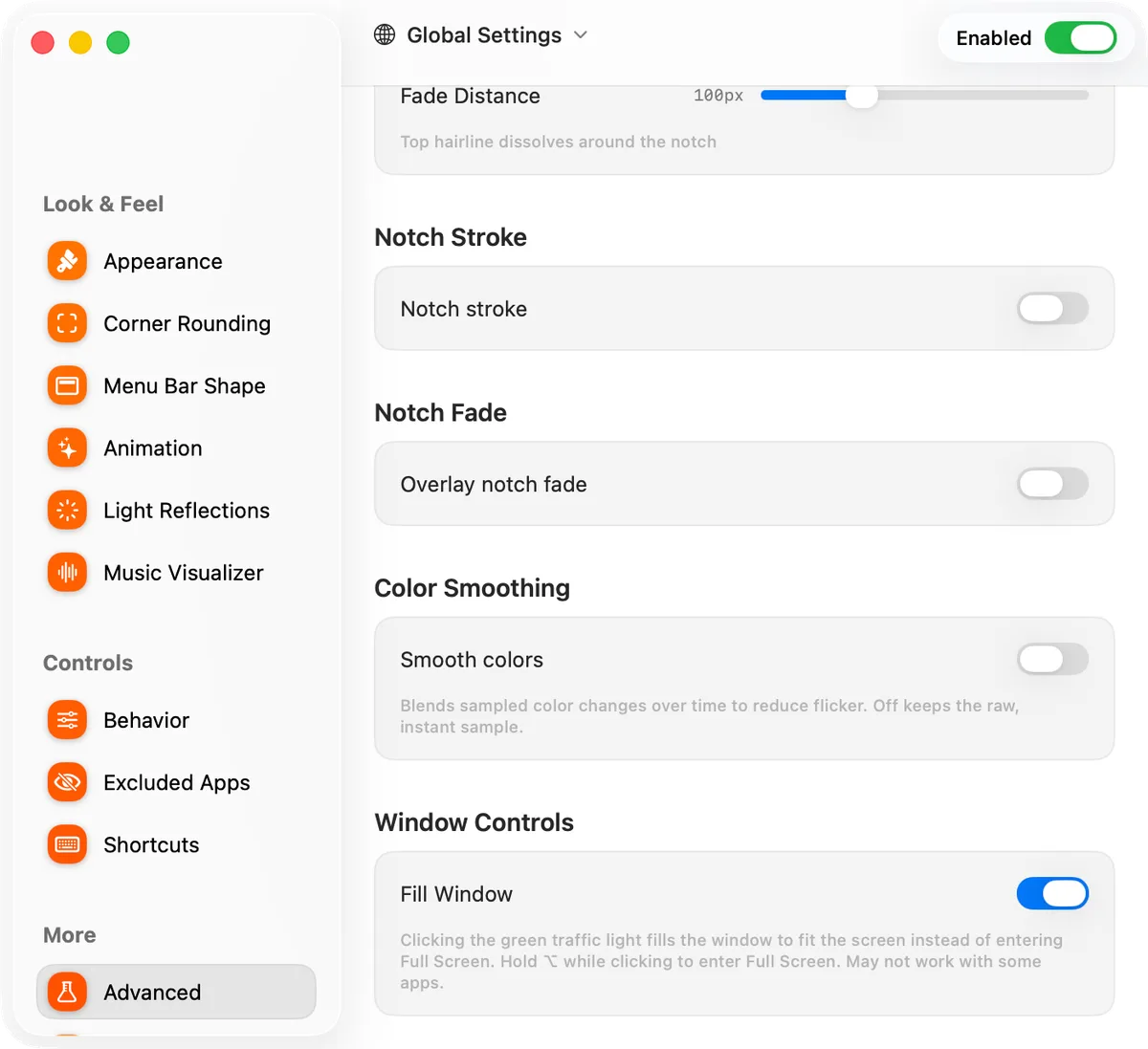
- Decide what the top strip looks like. Live or an auto-sampled Solid color takes the app’s own toolbar color, so Safari’s, Figma’s or Xcode’s window seems to run to the top edge of the screen. Or pick any of the other styles — a gradient, a blur, a pill, a color of yours — the top edge is as customizable as the rest of the app.
- Turn on Always on in Settings › Behavior if you want the strip to stay over an empty desktop too, and give each app its own look with per-app profiles: one app edge to edge in its own color, another with a gradient, a third excluded so the overlay steps aside.
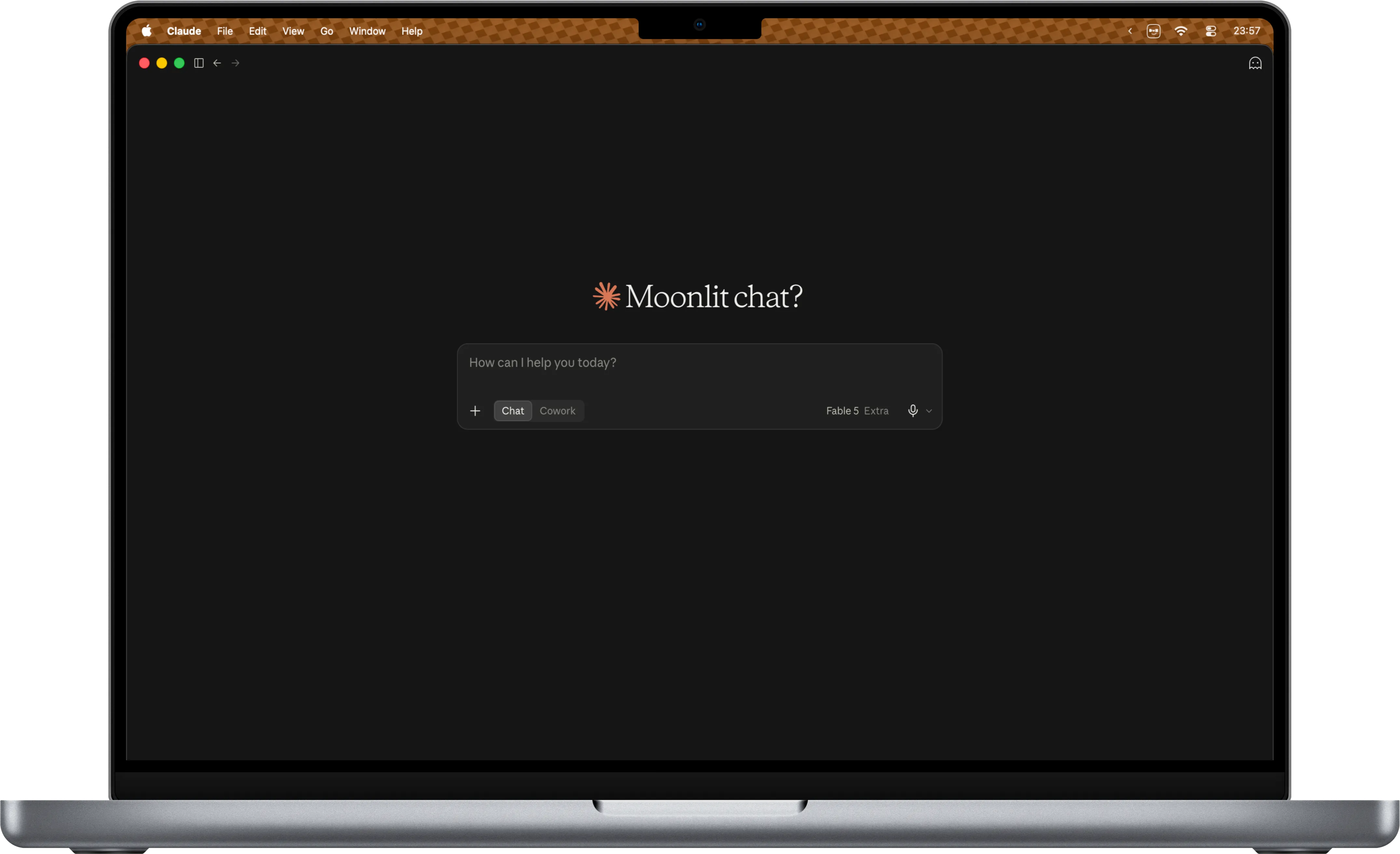

The result looks like full screen and behaves like a window. ⌘-Tab, Mission Control, the Dock and your other windows carry on as usual, there is no animation and no new Space, and when you need Apple’s Full Screen for a presentation or a film, ⌃⌘F still works.
Which to use
- A presentation, a film, a game: Apple’s Full Screen, so nothing can appear on top.
- A big window you still want to layer with others: Fill, from the green button or fn-⌃-F.
- The full-screen look for the apps you live in, without the Space: hide the menu bar, turn on Fill Window, and let Dynamic Menu Bar paint the top edge. The guide to customizing the macOS menu bar covers the rest of the Menu Bar settings, and transparent or solid menu bar on Tahoe covers what the strip can look like.
FAQ
How do I go full screen on a Mac?
Click the green button at the top left of the window, or press ⌃⌘F. The window moves into a Space of its own and the menu bar and the Dock hide until the pointer reaches the edge of the screen.
How do I exit full screen on a Mac?
Press ⌃⌘F again, press Esc in most apps, or move the pointer to the top of the screen and click the green button when the menu bar slides in.
Can I make a window fill the screen without a new Space?
Yes. On macOS 15 Sequoia and later, hover over the green button and choose Fill, press fn-⌃-F, or drag the window to the top edge of the screen. In Dynamic Menu Bar, Fill Window makes a plain click on the green button do the same.
Can I hide the menu bar without going full screen?
Yes. System Settings › Menu Bar › Automatically hide and show the menu bar › Always. The bar slides back when the pointer touches the top edge. With Dynamic Menu Bar, the strip it leaves behind shows in your app's own color instead of standing empty.